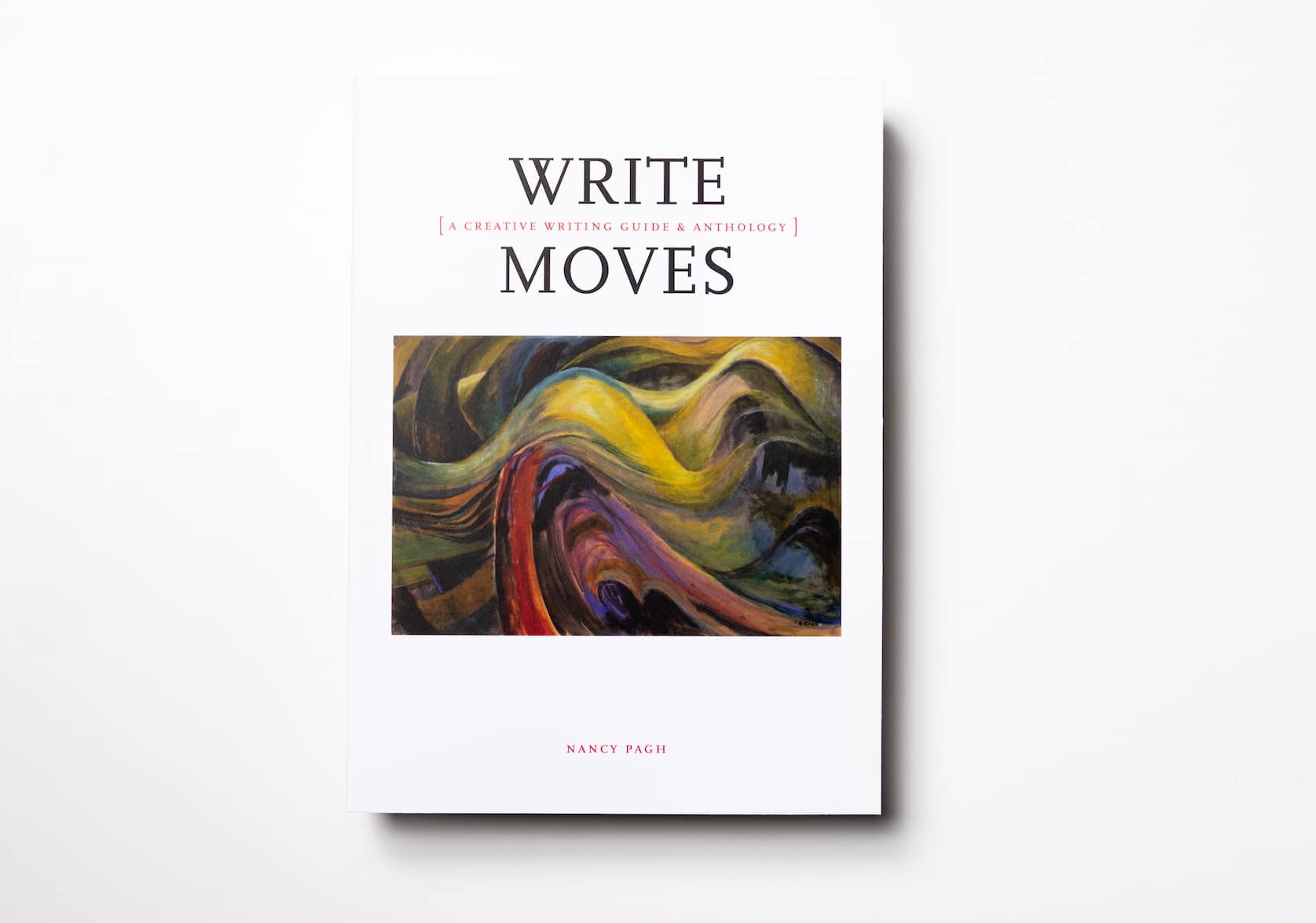
Write Moves by Nancy Pagh
$ 34.99
See long description associated with images on this page. From the publisher: An introductory creative writing textbook that bridges the warmth of trade writing with the expertise of a textbook, presented in a flexible and compact form. Write Moves is an invitation for the student to understand and experience creative writing in the larger frame of humanities education. The practical instruction offered comes in the form of “moves” or tactics for the apprentice writer to try. But the title also speaks to a core value of this project: that creative writing exists to move us. The book focuses on concise, human-voiced instruction in poetry, the short story, and the short creative nonfiction essay. Emphasis on short forms allows the beginning student to appreciate lessons in craft without being overwhelmed by lengthy model texts; diverse examples of these genres are offered in the anthology. Praise for Write Moves: “Write Moves lays out the essential matters of the writer’s craft with precision. It takes the reader on a journey across three distinct genres—poetry, short story, and essay—offering a wealth of practical advice on the way. Nancy Pagh’s writing exercises and thoughtfully chosen anthology are a gift for creative writing students.” — Raza Ali Hasan, author of Sorrows of the Warrior Class “Inspiring and comprehensive, Write Moves takes a friendly, colloquial tone, gently guiding aspiring writers through the often intimidating process of putting pen to paper and then reworking (and reworking!) those initial words until they’re just right. Pagh succeeds in creating a fun, flexible, and energetic approach to writing. The selection of readings hits on traditional favorites as well as contemporary and innovative works; the blend is bound to spark creativity.” — Angie Abdou, Athabasca University “A sharp, keenly perceptive guide and anthology, distinguished from its peers in imagination and scope. By imbuing each chapter with examples from her own process, Pagh eschews the stuffiness one typically associates with guides of this sort. Far from prescriptive, the effect is welcoming and formative. This anthology will prove valuable for student and teacher alike.” — Rod Moody-Corbett, University of Calgary “Write Moves is an excellent resource for those teaching and studying Creative Writing. It is comprehensive, rigorous, and highly readable. No matter what sort of imaginative work you are interested in bringing into this world, you will find much here to focus and illuminate your practice.” — Wayde Compton, Simon Fraser University About the author: Nancy Pagh teaches creative writing, literature, and Canadian-American studies at Western Washington University. She is the author of the poetry collections No Sweeter Fat (Autumn House Press, 2007) and Once Removed (MoonPath Press, 2016) and of At Home Afloat: Women on the Waters of the Pacific Northwest (University of Calgary Press, 2001). Her work has appeared in Prairie Schooner, Canadian Literature, RHINO, Valparaiso Poetry Review, Rattle, Crab Creek Review, The Bellingham Review, Poetry Northwest, O magazine, and many other journals. Table of Contents Welcome I. Practice Why Write? Language that is our own Chaos and control To write as if we matter Practicing Perception Showing up Timed practice Prompts Attention and empathy Sitting with Procrastination and perfectionism Reading as practice Drafting Running as far as we can Defusing three sources of tension Habits of hand, habits of mind Revision Writing is rewriting The transition from author to reader Exceeding your initial expectations Feedback and workshop Line editing and polishing II. Craft Image, Detail, and Figurative Language Creating an experience Using specific details Figuring the figurative Sound Sound like you mean it The mind’s ear Cultivating a sound garden Use the gas and use the brakes Character and Setting A symbiotic relationship Somebody somewhere Desire and change Creating memorable characters Many uses for setting Scene, Exposition, Reflection Three modes to direct Causing scenes Going on an exposition Thought, distance, reflection Voice and Perspective An animated presence Many points of view The lens of perspective Another’s voice III. Genre Writing Poems The eternal virginity of words Lines and rhymes Measuring meter Shapes for our singing Writing Stories How stories move The story arc Plotting time Plotting trouble Truth and fiction Literary fiction and genre fiction Writing Personal Essays The umbrella of nonfiction Personal truth The “I” of the essay Form and feeling IV. Anthology Alternative Tables of Contents Contents by Genre and Form Contents by Theme Readings Kelli Russell Agodon, “Geography” see also Ak’Abal, Humberto, “The Dance” Sherman Alexie, “Totem Sonnets” One and Seven Taiaiake Alfred, “What I Think of When I Think of Skin” Dorothy Allison, from Two or Three Things I Know for Sure Sherwood Anderson, “A Death in the Woods” see also Anonymous, “Old Man of Nantucket” Reinaldo Arenas, “The Downpour” Elizabeth Bachinsky, “For the Pageant Girls” see also Basho, Matsuo, untitled Jean-Dominique Bauby, “Bathtime” Jo Ann Beard, “The Fourth State of Matter” Ambrose Bierce, “Occurrence at Owl Creek Bridge” Barbara Bloom, “Making Things Right” Stephanie Bolster, “Many Have Written Poems about Blackberries” T. Alan Broughton, “Song for Samson” Emily Carr, “The Cow Yard” Raymond Carver, “Chef’s House” Arlan Cashier, “Lost Sweater” Ann Choi, “The Shower” Kate Chopin, “The Story of an Hour” Sandra Cisneros, “My Wicked Wicked Ways” Ivan E. Coyote, “This, That, and the Other Thing” Jim Crace, untitled #17 from The Devil’s Larder James Crews, “Lover Boys” see also Crozier, Lorna, “first cause: light” Michael Crummy, “Bread” Natalie Diaz, “My Brother at 3 A.M.” Emily Dickinson, “I started Early –: Took my Dog –” Annie Dillard, “Signals at Sea” Brian Doyle, “Leap” see also Dumont, Marilyn, “Still Unsaved Soul” T. S. Eliot, “The Love Song of J. Alfred Prufrock” see also Flenniken, Kathleen, “What I Saw” see also Forché, Carolyn, “The Colonel” David Foster Wallace, “Incarnations of Burned Children” Gabriel García Márquez, “The Handsomest Drowned Man in the World” Samuel Green, “Some Reasons Why I Became a Poet” Corrine Hales, “Power” Kathleen Halme, “A Study in O” Barbara Hamby, “Ode to My 1977 Toyota” Patricia Hampl, “Red Sky in the Morning” Joy Harjo, “Suspended” Terrance Hayes, “The Same City” Ernest Hemingway, “Hills like White Elephants” Langston Hughes, “Harlem (2)” Maria Hummel, “I’m This Many” David Ignatow, “The Bagel” Denis Johnson, “Steady Hands at Seattle General” James Joyce, “Eveline” Kristiana Kahakauwila, “Thirty-Nine Rules For Making a Hawaiian Funeral Into A Drinking Game” Rachel Knudsen, “How to Enter the Ocean” see also Kurono, Yasuko, untitled Stephen Kuusisto, “Horse” Patrick Lane, “The Far Field” Evelyn Lau, “An Insatiable Emptiness” Josh Lefkowitz, “Saturday Salutation” Susan Lester, “Belongings” Paul Lisicky, “Snapshot, Harvey Cedars: 1948” Sonja Livingston, “The Ghetto Girls’ Guide to Dating and Romance” Patricia Lockwood, “Rape Joke” Alistair MacLeod, “The Boat” John Marshall, “Taken With” series #22 Paul Martínez Pompa, “Exclamation Point” Marty McConnell, “Frida Kahlo to Marty McConnell” see also Mendoza, Carlos, “Young Don Juan” Edna St. Vincent Millay, “What Lips My Lips Have Kissed. . .” Brenda Miller, “Getting Yourself Home” Madison Minder, “Green” Janice Mirikitani, “Recipe” Shani Mootoo, “Out on Main Street” Donald Murray, “War Stories Untold” Aimee Nezhukumatathil, “The Witching Hour” Lewis Nordan, “Owls” Howard Norman, from I Hate to Leave this Beautiful Place B. J. Novak, “Julie and the Warlord” Flannery O’Connor, “A Good Man Is Hard To Find” see also Oliver, Mary, “The Summer Day” Michael Ondaatje, “The Cinnamon Peeler” Mallory Opel, “Among the Blossoms” Simon Ortiz, “My Father’s Song” see also Pagh, Nancy, “After I Die” Nancy Pagh, “Love Song: After T.S. Eliot” Elise Partridge, “Edwin Partridge” Sylvia Plath, “Mirror” see also Purpura, Lia, “September 9” Sina Queyras, “On the Scent, #14” Simon Rich, “Unprotected” Rainer Maria Rilke, “ARchaic Torso of Apollo” David Sedaris, “The Drama Bug” see also Seibles, Tim, “Treatise” Richard Selzer, “The Knife” Richard Shelton, “The Stones” Peggy Shumaker, “Moving Water, Tucson” Richard Silken, “Scheherezade” Tom Sleigh, “Aubade” Patricia Smith, “Hip-Hop Ghazal” Mark Spragg, “In Wyoming” Brent Staples, “The Coroner’s Photographs” Lawrence Sutin, “Father Holding Baby” Amy Tan, “Confessions” Madeleine Thien, “Simple Recipes” see also Turner, Brian, “Eulogy” James Tyner, “At a Barbecue for R.C. One Week after He Is Out of Iraq” Priscila Uppal, “Sorry, I Forgot To Clean Up After Myself” Luisa Valenzuela, “Vision out of the Corner of One Eye” Thomas Whitecloud, “Blue Winds Dancing” Walt Whitman, “When I heard the Learn’d Astronomer” see also Wilbur, Richard, “Sleepless at Crown Point” Theresa Williams, “Urgent Note for My Son Langston” Jeannette Winterson, “The Three Friends” James Wright, “A Blessing” Bethany Yeager, “Divorce” Permissions Acknowledgements Index (Credits: Publisher’s description has been retrieved from BiblioShare. Photo of front and back cover by Dahlia Katz.)
Related products
-
- Out of Stock
In All Its Fury Great Blizzard 1888
- $ 13.46
- Read more
-
-
- Out of Stock
100 Deadly Skills: Survival Edition
- $ 10.79
- Read more
-